

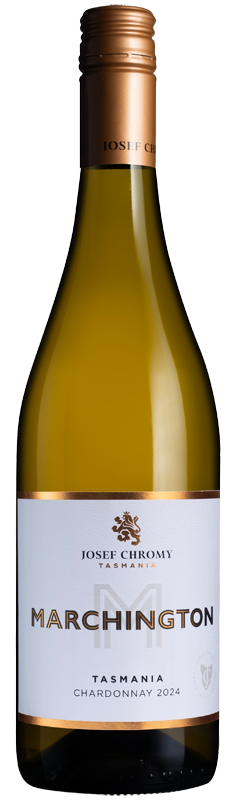
Josef Chromy Marchington Tasmania Chardonnay 2024
- White - Dry
 Australia
Wine Details
- Chardonnay
- 7.7025 Units
- Vegan
- 13% ABV
- 750 ml
- Vegetarian
- 30 September 2030
Tasmanian Chardonnay is not easy to find outside of Tasmania. This not only comes from Tasmania but is made for us exclusively at the great, 5-Star Josef Chromy estate. A thrilling must-try new white, and a name with a very colourful story behind it.
Josef Chromy set up his winery in Tasmania in 2007 aged 76, having escaped from Czechoslavakia in 1950. We are very proud to have a Chromy exclusive, as Tasmania’s highly celebrated wines almost never leave the state!
This fresh and elegant white exclusive takes its name from the source of its premium fruit – the Marchington Vineyard, planted on the Marchington estate, by a man called John Smith, the alleged illegitimate son of a King of England, shipped to Tasmania in the 1800s.
For John Lehmann in The Australian "The palest of pale straw hue in your glass hints at a delicate, pure nose that offers stone fruit like yellow nectarine and apricot, subtle florals and a hint of tropicality as it warms. The fruit on the textured palate is more overt, with citrus and pineapple, balanced with a steely acidity and a long finish. Some fresh Bruny Island oysters would keep things local and lovely." Don’t miss it!
Tasmanian Chardonnay is not easy to find outside of Tasmania. This not only comes from Tasmania but is made for us exclusively at the great, 5-Star Josef Chromy estate. A thrilling must-try new white, and a name with a very colourful story behind it.
Josef Chromy set up his winery in Tasmania in 2007 aged 76, having escaped from Czechoslavakia in 1950. We are very proud to have a Chromy exclusive, as Tasmania’s highly celebrated wines almost never leave the state!
This fresh and elegant white exclusive takes its name from the source of its premium fruit – the Marchington Vineyard, planted on the Marchington estate, by a man called John Smith, the alleged illegitimate son of a King of England, shipped to Tasmania in the 1800s.
For John Lehmann in The Australian "The palest of pale straw hue in your glass hints at a delicate, pure nose that offers stone fruit like yellow nectarine and apricot, subtle florals and a hint of tropicality as it warms. The fruit on the textured palate is more overt, with citrus and pineapple, balanced with a steely acidity and a long finish. Some fresh Bruny Island oysters would keep things local and lovely." Don’t miss it!